
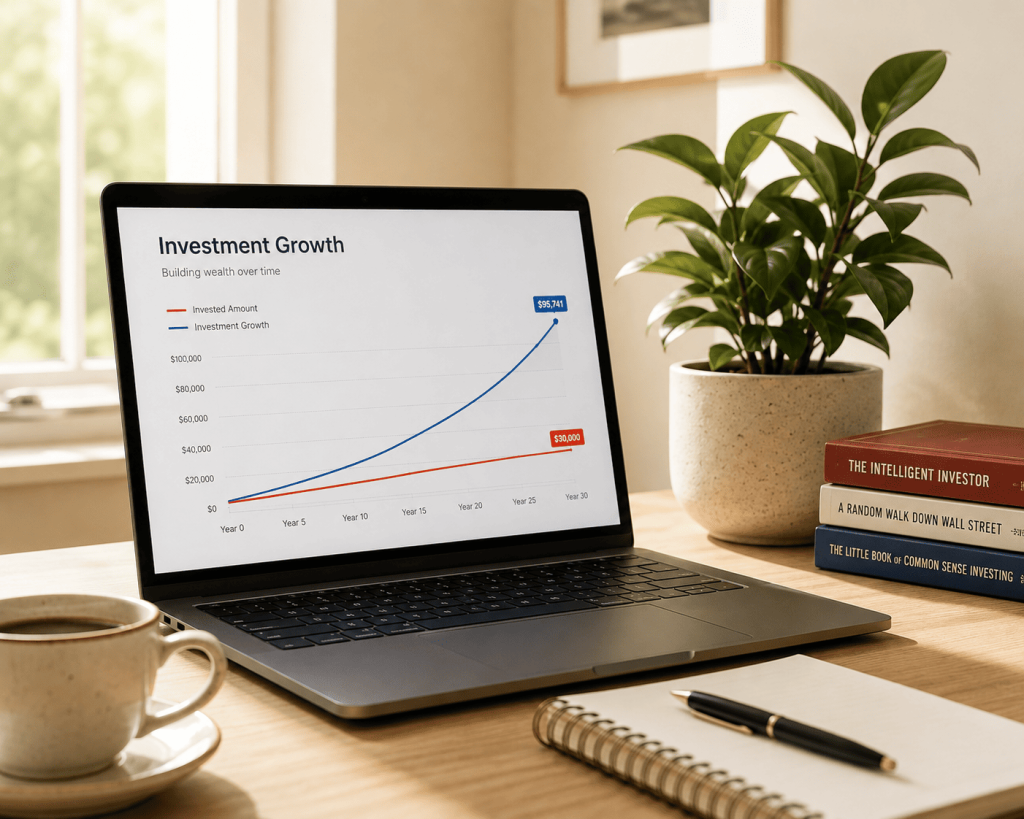
“Passive income” gets sold as money that appears with zero effort. In reality, almost every passive income stream requires real upfront work, money, or both — the “passive” part is that it keeps paying after the initial effort, not that the initial effort doesn’t exist. Here’s an honest look at what actually works in 2026.
Dividend and Index Fund Investing
The most genuinely passive option on this list. Once money is invested in dividend-paying stocks or broad index funds, it requires essentially no ongoing work. The tradeoff is that meaningful income requires meaningful capital — this is a long-term wealth-building tool, not a quick income replacement.
High-Yield Savings and CDs
Not glamorous, but genuinely passive and genuinely safe. With top high-yield savings accounts paying around 4% APY in 2026 compared to a national average closer to 0.4%, simply moving idle cash into the right account is one of the lowest-effort “passive income” moves available — see our full guide to comparing high-yield savings accounts for how to evaluate options.
Real Estate Without Being a Landlord
Real Estate Investment Trusts (REITs) let you invest in real estate income without buying property, screening tenants, or fixing a broken water heater at 11 p.m. REITs trade like stocks and typically pay out the majority of their taxable income as dividends, making them one of the more accessible ways to get real-estate-adjacent income with genuinely passive involvement.
Digital Products and Content
Courses, templates, printables, stock photos, and ebooks all share the same structure: significant upfront effort, then ongoing (if unpredictable) income as people continue to buy or license the work. This is the most “active-to-passive” category on the list — the first version rarely sells itself, and most success stories involve real marketing effort before the income becomes low-maintenance.
Renting Out Assets You Already Own
A spare room, a car that sits unused most days, or specialty tools and equipment can all generate income through rental marketplaces. This tends to require more ongoing involvement than the other categories — scheduling, communication, occasional maintenance — so it sits closer to “semi-passive” than truly hands-off.
Effort vs. Return: An Honest Comparison
| Income Stream | Upfront Effort | Ongoing Effort | Capital Needed |
|---|---|---|---|
| Dividend/index investing | Low | Very low | High for meaningful income |
| High-yield savings/CDs | Very low | Very low | Moderate |
| REITs | Low | Very low | Low to moderate |
| Digital products | High | Low to moderate | Low (mostly time) |
| Renting owned assets | Moderate | Moderate | Depends on the asset |
Frequently Asked Questions
What’s the most realistic passive income idea for someone starting with little money?
Digital products and renting out assets you already own require the least starting capital — the cost is time and effort upfront rather than cash, which makes them accessible even without savings to invest.
Is passive income actually taxed differently than a regular job?
It depends on the source. Dividend income and REIT distributions have their own tax treatment separate from wage income, and rules vary by account type (taxable vs. retirement account) — a tax professional can map this to your specific situation.
How long does it take before passive income actually feels passive?
For most of these streams, expect months to a few years of active building before the income requires meaningfully less ongoing effort. Anyone promising truly immediate, effortless income is usually selling something.
This post is for general informational purposes and isn’t personalized financial or investment advice.