Choosing between secured vs. unsecured credit cards is often the first real decision in your credit-building journey, and getting it right can save you months of wasted applications and hard inquiries. Here’s how each type actually works, and how to know which one fits where you are right now.
Secured vs. Unsecured Credit Cards: The Core Difference
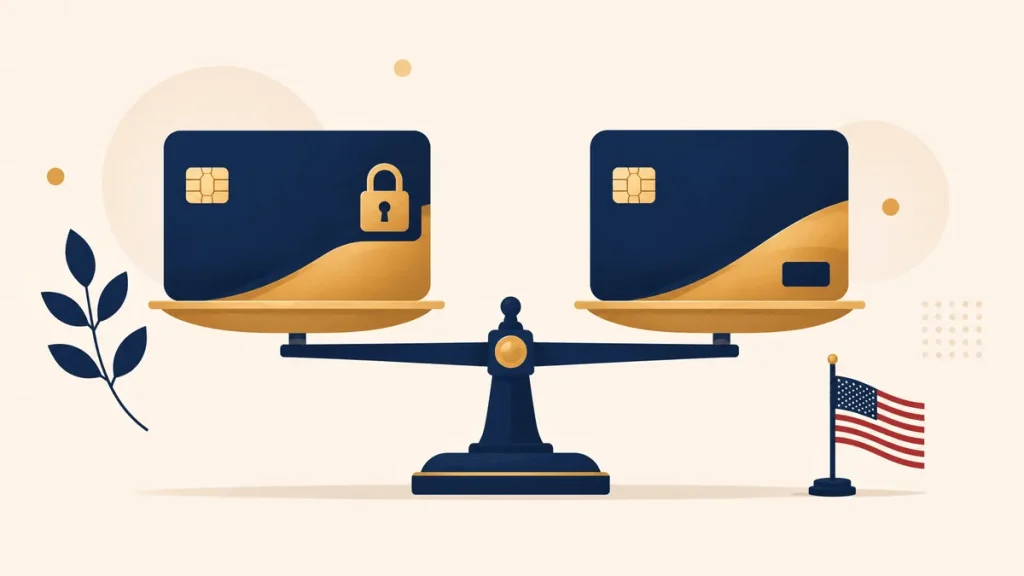
A secured card requires a refundable cash deposit, usually equal to your credit limit, which protects the issuer if you don’t pay. An unsecured card requires no deposit; the issuer extends credit based purely on your creditworthiness. That single difference explains almost everything else about how each card behaves.
How Secured Cards Work
You pay a deposit, typically $200 to $500, when you open the account. That deposit becomes your starting credit limit. You use the card like any other, and your payment activity is reported to the credit bureaus every month. After a period of on-time payments, usually 6 to 12 months, many issuers will refund your deposit and “graduate” you to an unsecured card automatically.
Because the issuer’s risk is covered by your own money, approval odds are high even with no credit history, a thin file, or past negative marks. This makes secured cards the most reliable entry point for most people starting from zero.
How Unsecured Cards Work
Unsecured cards, including student cards and starter cards for fair credit, extend a credit line without a deposit. Because the issuer is taking on more risk, approval depends more heavily on your existing credit history, income, and any past derogatory marks. Interest rates also tend to run a bit higher than on cards for excellent credit, reflecting that added risk.
Which One Builds Credit Faster?
In practice, neither type builds credit faster on its own. What determines your score is the same for both: on-time payments, low utilization, and account age. However, a secured card often gets you approved sooner if you’d otherwise be denied for an unsecured product, and starting sooner means your payment history starts accumulating sooner too.
Choosing Between Secured and Unsecured for Your Situation
No Credit History
Go with a secured card, or a student card if you’re enrolled in school. Both are designed specifically for this starting point.
Rebuilding After Damage
A secured card is almost always the safer, more reliable choice, since approval isn’t contingent on the very credit history you’re trying to repair.
Fair or Building Credit Already
You may already qualify for an unsecured starter card, which skips the deposit requirement entirely. Check your pre-qualification odds first, since that typically uses a soft credit pull that won’t affect your score.
What to Compare Before You Apply
- Reporting to all three bureaus, otherwise the card only helps part of your credit file.
- Deposit refund policy, for secured cards, including how and when you get your money back.
- Automatic graduation path, so you don’t have to apply for a new card just to move to unsecured.
- Annual and monthly fees, which should ideally be zero for a starter card.
- APR, which matters most if you ever carry a balance.
Once your utilization starts trending in the right direction, it’s worth understanding exactly how that ratio affects your number; see our full breakdown in credit utilization explained.
Common Mistakes With Either Card Type
- Closing a secured card the moment you’re approved for something better, which can shorten your average account age.
- Maxing out an unsecured starter card to chase a small rewards bonus.
- Forgetting to request the deposit refund on a secured card that doesn’t auto-graduate.
- Applying for multiple cards of either type within a short window, stacking hard inquiries unnecessarily.
For an independent, non-commercial explanation of how card type affects your credit profile, the Consumer Financial Protection Bureau’s credit resource is a solid reference point.
Frequently Asked Questions
Is a secured card bad for your credit?
No. A secured card affects your score the same way any card does, through on-time payments and utilization. It carries no inherent penalty for being secured.
Can I have both a secured and an unsecured card at the same time?
Yes, and having more than one account, once you can manage the payments comfortably, can help your credit mix and overall available credit.
Do I get my deposit back from a secured card?
Yes, as long as the account is in good standing when you close it or graduate to unsecured; the deposit is refundable, not a fee.
Which is easier to get approved for?
Secured cards are generally easier to get approved for, since the deposit removes most of the issuer’s risk.
How long should I keep a secured card open?
Keep it open at least until you’ve built 6 to 12 months of positive history, and consider keeping it open longer if closing it would meaningfully shorten your average account age.
This article is for educational purposes and is not financial advice. Card terms, deposit requirements, and approval criteria vary by issuer and change over time.