
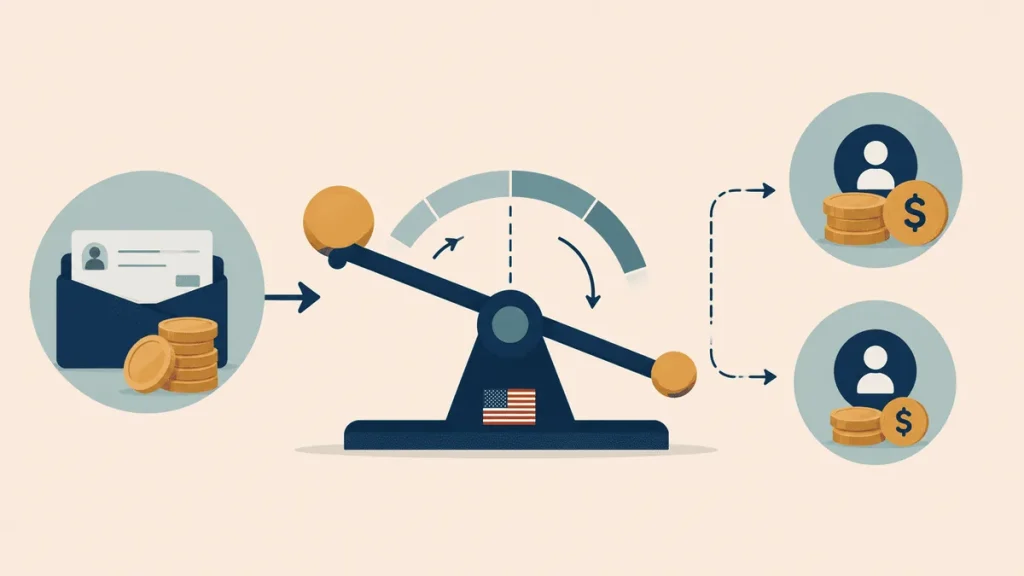
Income-driven repayment plans set your federal student loan payment as a percentage of your discretionary income, not a fixed amount tied to your balance. For borrowers whose income doesn’t comfortably cover the standard payment, these plans can be the difference between staying current and falling into default.
How Income-Driven Repayment Actually Works
A standard plan divides your balance into equal payments over a set number of years. An income-driven plan works differently. It calculates your payment from your income, your family size, and a percentage set by the specific plan. As your income changes, so does your payment. You typically recertify once a year.
Why Someone Would Choose Income-Driven Repayment
- Your payment can drop significantly compared to the standard 10-year plan, especially early in a career.
- Remaining balances can be forgiven after a set number of years of qualifying payments, typically 20 to 25 years depending on the plan.
- Payments can be as low as zero dollars if your income falls below a certain threshold. Your loan still counts as “in repayment,” not default.
- It works alongside Public Service Loan Forgiveness for borrowers in qualifying public service jobs.
The Trade-Offs to Understand
- You may pay more interest over time. A lower monthly payment can mean a longer payoff timeline than the standard plan.
- You must recertify your income every year. Miss the deadline, and your payment can jump back to the standard amount.
- Forgiven balances may count as taxable income in some cases, depending on the plan and current tax law. Plan ahead rather than being surprised later.
Federal Loan Repayment Plans Change Often
The specific income-driven plans available, their formulas, and their forgiveness timelines have changed multiple times in recent years. Significant changes took effect in 2026 as well. Rather than relying on a fixed list of plan names that may be outdated, confirm which plans are currently open to new enrollment directly at studentaid.gov. For the latest overview of what changed this year, see our related post on student loan forgiveness in 2026.
How to Apply
- Log in to your account at studentaid.gov and complete the income-driven repayment application.
- Provide income verification, either through IRS data retrieval or by submitting pay stubs directly.
- Choose or confirm which plan you’re applying for, if more than one option is currently available to you.
- Continue making your current payment until your servicer confirms the new plan and payment amount.
- Mark your recertification date and set a reminder well before it’s due.
Is Income-Driven Repayment Right for You?
It tends to make the most sense in a few situations. Your standard payment is a significant strain relative to your income. You’re pursuing Public Service Loan Forgiveness. Or you expect your income to rise substantially over time and want breathing room now. If you can comfortably afford the standard payment and want to minimize total interest paid, the standard 10-year plan is often still cheaper in the long run.
Common Mistakes to Avoid
- Missing the annual recertification deadline, which can revert your payment to the standard amount unexpectedly.
- Assuming all income-driven plans work identically; the percentage of income and forgiveness timeline can differ between plans.
- Not saving for the potential tax impact of a large forgiven balance.
- Ignoring private loans, which aren’t eligible for income-driven federal repayment plans at all.
Frequently Asked Questions
Do income-driven repayment plans apply to private student loans?
No. These plans only cover federal student loans. Private loans have their own hardship or modification options, and these vary by lender.
Can my payment really be zero dollars?
Yes. If your discretionary income falls below the threshold set by your plan, your calculated payment can be zero. The loan still counts as being in good standing.
What happens to my balance if it’s not fully forgiven?
You keep making income-based payments until either the balance is paid off or you reach the forgiveness timeline for your specific plan.
How often do I need to recertify my income?
Typically once a year. Your servicer will notify you of your specific recertification date.
Is loan forgiveness under these plans taxable?
It can be, depending on the plan and current federal tax law. Check the latest guidance at studentaid.gov or with a tax professional before counting on tax-free forgiveness.
This article is for educational purposes and is not financial, legal, or tax advice. Federal repayment plans change; confirm current details at studentaid.gov.